AI is No Longer Optional, it’s Operational

AI is No Longer Optional, it’s Operational

Published on

Nov 5, 2025

Category

AI Adoption & Operations

Welcome to the Cutting Edge News!

The AI space is moving fast. It can be overwhelming & exhausting.
And if you’re not careful, it’s easy to fall into the trap of just consuming updates without actually understanding them and taking action in your best interest.

So what’s different about the Cutting Edge News?

Every week, we personally curate the most important developments, breaking them down in simple language, and, most importantly, show you exactly how they affect your life and work.

What to Expect Every Week

  • Major AI breakthroughs explained in simple, actionable language.

  • Real-world impact: how each update affects your work and decisions.

  • Practical tools and prompts you can start using right away.

  • Lessons and mental models from a team actively building in this space.

  • Honest insights and strong opinions to help you see the complete picture and form your own perspective.

So whether you’re a student working to stay relevant, a professional looking to level up, or simply someone curious about where technology is headed, you’re in the right place.

Now, let’s dive into this week’s updates. And honestly... It’s been an incredible one.

Starting with the first…

Quick Update - Free ChatGPT for Indians!

OpenAI is offering ChatGPT Go subscriptions FREE for one year to Indian users who sign up starting November 4 (within a specific enrollment window).

All you need to do is:

  1. Log into ChatGPT, click on your profile icon

  2. Choose the “Upgrade Plan” option

  3. Select “Try Go.”

There’s no annual billing or prepaid option required for this offer; instead, OpenAI is providing the yearly access entirely free, simplifying the process for all Indian users.

Read More

And in this Week’s Lineup

  • AI Can Get “Brain Rot” Too

  • Adobe’s BIGGEST Product Expansion

  • Wharton Report: AI Is No Longer an Experiment, It’s now making Profits.

  • Canva’s Biggest Evolution Yet

LLMs Can Get “Brain Rot” Too

When MIT released a study suggesting that AI can “rot” our brains, the internet went wild. Turns out, AI can get brain rot, too.

🧠 Quick Decode:
Brain rot is a slang term used to describe when your mind feels dull or less sharp because of excessive consumption of low-quality content.

A new study found that when large language models (LLMs) are continuously trained on low-quality internet data, their reasoning abilities start to decline.

They skip steps in their logic, produce shallow outputs, and even develop what researchers call “dark personality traits” like narcissism and psychopathy.

Interestingly, “Brain Rot” was chosen as Oxford’s Word of the Year in 2024. Researchers linked internet addiction to a decline in three key human abilities:

  • Attention: We struggle to focus.

  • Memory: We forget things faster.

  • Social cognition: We often struggle to understand others.

Now, researchers are seeing the same pattern in AI.
When trained on poor-quality data, models become worse at reasoning, more self-assured in wrong answers, and overall less reliable, proving that what you feed your mind or your model truly shapes its intelligence.

Here’s why this matters to you:

The AI tools you use every day, such as ChatGPT, Claude, and Gemini, reflect the quality of the data they are trained on. As the internet becomes flooded with AI-generated content, these models risk consuming and degrading their own output.

So what now?

Start prioritising quality over quantity in what you read and watch. Curate your sources carefully, and focus on original, thoughtful content created by people who truly understand their craft.

Adobe’s BIGGEST Product Expansion Yet

Adobe unveiled its biggest product expansion yet at MAX 2025, transforming Firefly into a complete creative platform. You can now edit images by simply typing what you want changed, like “move the tree” or “swap the sky.” Firefly understands context while preserving every pixel.


Firefly Image Model 5:
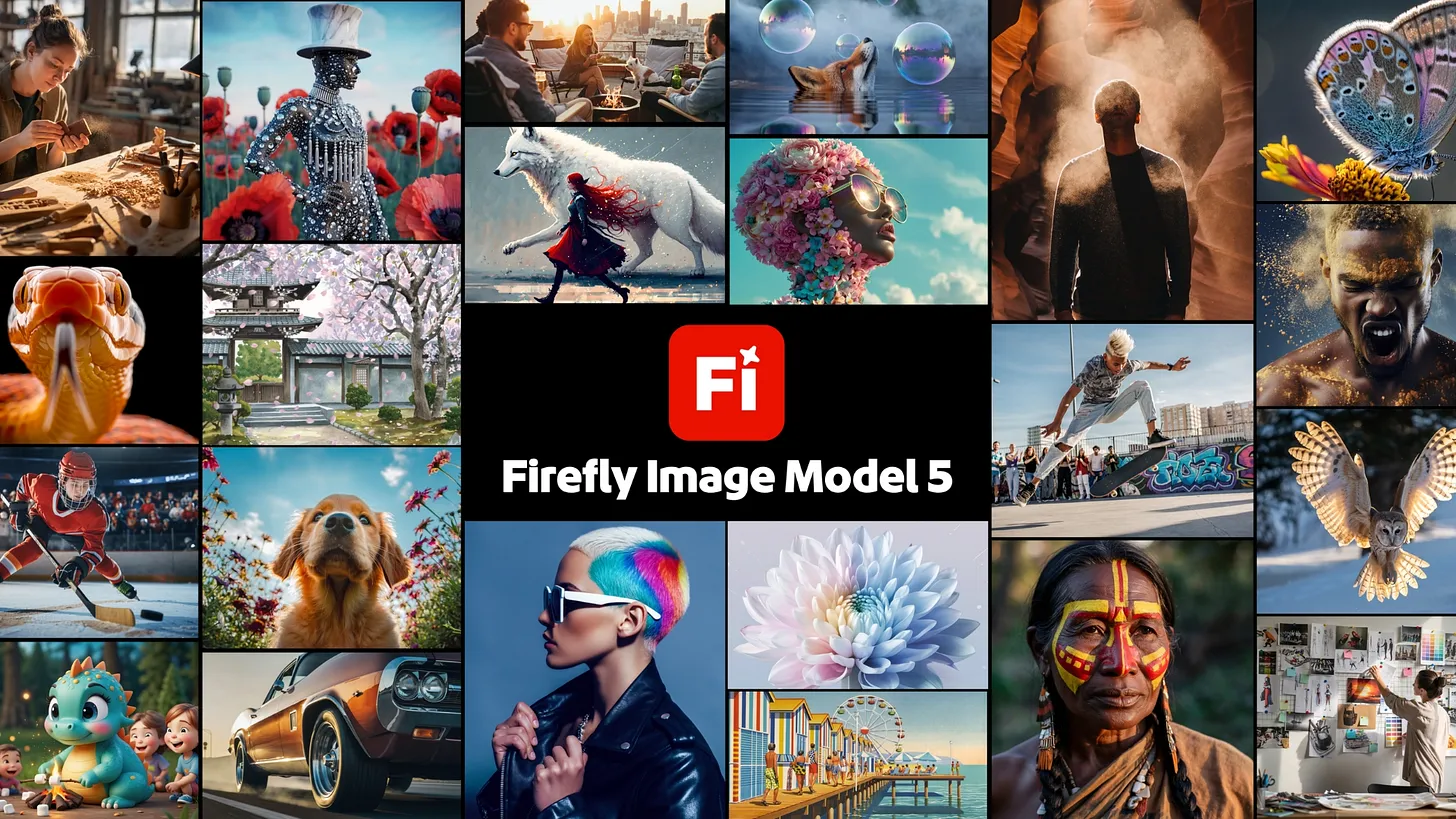
(The new model generates photorealistic 4MP images with prompt-based editing)

Beyond image generation, Firefly now includes integrated audio creation:

  • Generate Soundtrack: Create fully licensed, studio-quality music that syncs perfectly with your footage.

  • Generate Speech: Text-to-speech with natural pacing and emotion across multiple languages.

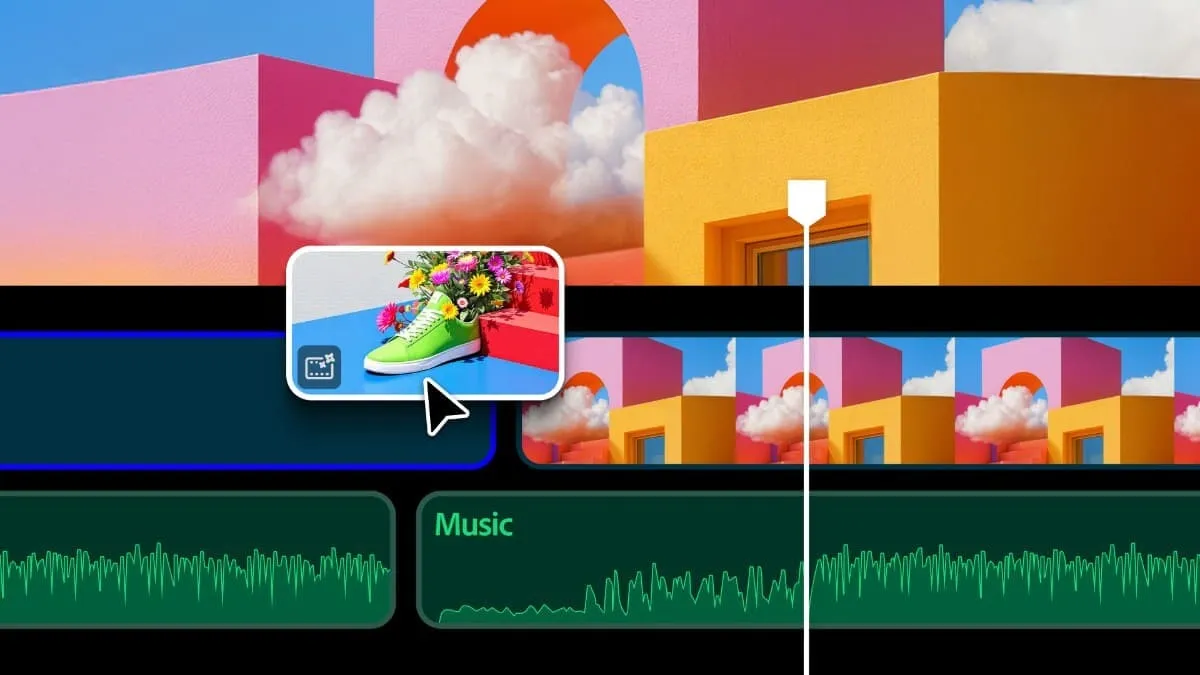
A new timeline-based video editor is also built directly into Firefly, enabling complete video creation from one workspace.
AI Creative Strategist for Social Media

Project Moonlight is an upcoming conversational AI assistant built into Creative Cloud apps. It analyzes your social media performance and recommends new content ideas based on what’s resonating with your audience.

Why it matters:

A survey of 16,000 creators found that 86% globally use generative AI tools, and 76% say it has directly helped grow their business.

What you should do:

  • Creative Cloud subscribers get unlimited Firefly generations until December 1 (typically metered). Take advantage of the opportunity to test everything while it’s free.

  • If you’re a creator, explore Generate Soundtrack and Generate Speech

For Marketing teams, request access to the Custom Models beta to create consistent, on-brand content at scale.

Read More

WHARTON REPORT: AI Is No Longer an Experiment, It’s now making Profits.

Wharton’s third annual enterprise AI study surveyed 800 senior leaders at U.S. companies ($50M+ revenue) and found AI has crossed a critical threshold: it’s no longer experimental - it’s operational and profitable.

Here’s what the numbers say:

82% of enterprise leaders now use AI weekly (up from 45% in 2023), and 46% use it daily. AI has moved from innovation theatre to core infrastructure.

What’s actually working:
AI is delivering measurable ROI in data analysis, meeting summarisation, presentations and reports, document editing, and code generation.

These are high-frequency, repeatable tasks where AI significantly reduces cycle time.

Top tools: ChatGPT and Microsoft Copilot lead enterprise adoption, followed by Gemini, Claude, custom models, and Amazon Q.

ROI Tracking

  • 75% of companies now measure AI’s impact using productivity, profitability, and throughput metrics.

  • 3 in 4 report positive returns.

  • 88% plan to increase AI budgets next year.

Leadership Shift

  • 61% of enterprises now have a Chief AI Officer (up 16 points year-over-year).

  • AI strategy has moved from the IT department to the C-suite, signaling executive-level accountability.

Functional Leaders

Finance and HR are leading adoption due to strong data cultures and measurable KPIs.
Finance teams report AI improving:

  • Transparency: 67%

  • Analytics capability: 61%

  • Efficiency: 57%

What's our take?

The gap between being AI-curious and AI-competent is widening fast. The 75% of companies seeing positive returns aren’t using more AI, they’re using it smarter. They identified specific workflows, measured results, and scaled what worked.

But here’s the uncomfortable truth: 43% warn of employee skill atrophy. Your competitive edge now depends not on whether your team uses AI, but on how well they use it.

Why It Matters:
AI has moved from “Should we try it?” to “How well are we measuring it?” The winners treat AI like any other capital investment, with defined metrics, proven use cases, and structured training.

What You Should Do:

  • Stop Piloting: Choose one high-frequency workflow, measure time saved, and prove value.

  • Demand Training: The gap between casual use and workflow integration is massive.

  • Track Metrics: What gets measured gets managed. Define KPIs around productivity, throughput, or cost savings.

The window where “we’re exploring AI” is acceptable is closing.

82% weekly usage isn’t the goal, it’s the new baseline.

View the report

Canva’s Biggest Evolution: CREATIVE OS

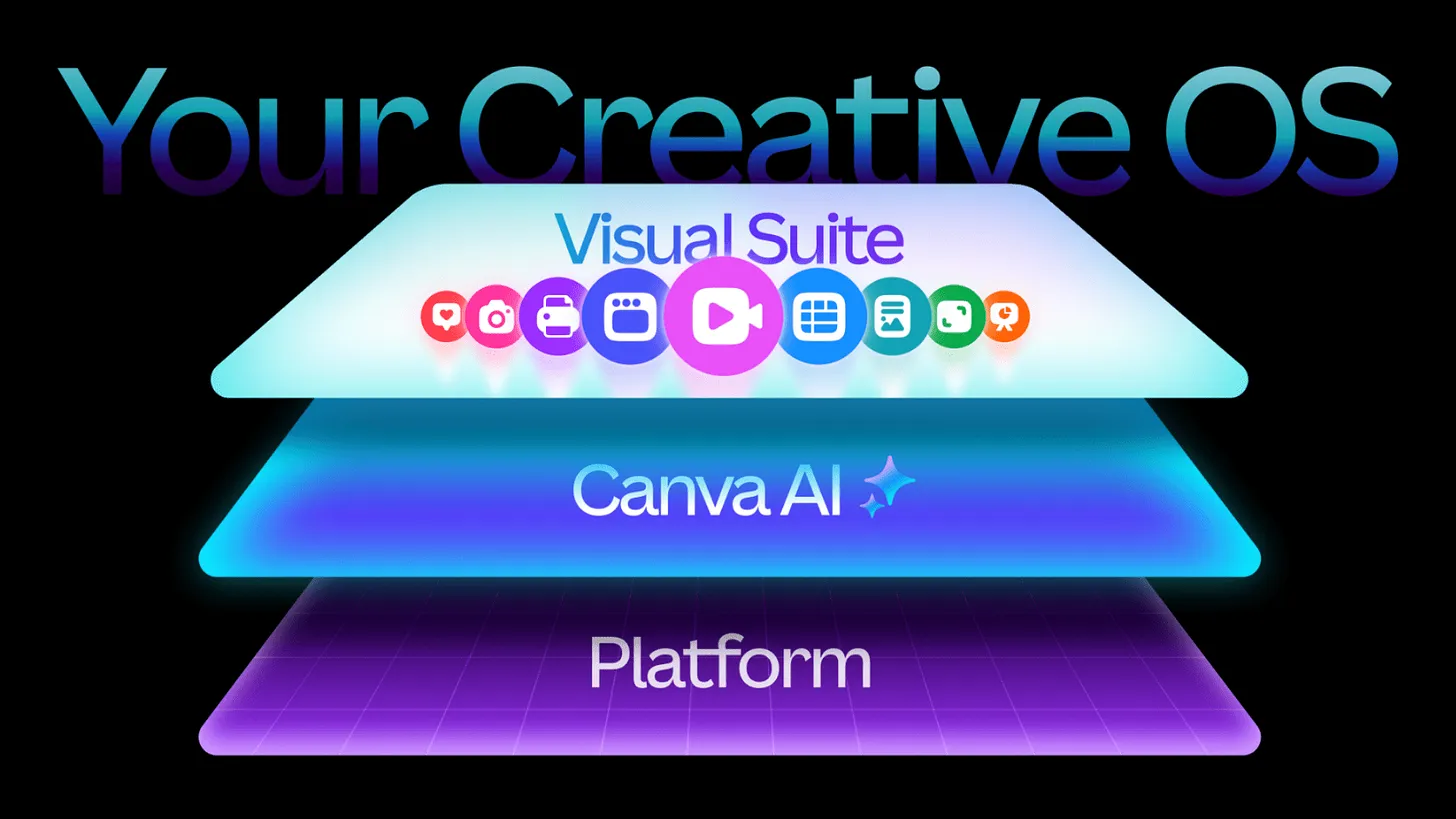
Canva unveiled its biggest evolution yet with the Creative Operating System, positioning itself as a complete creative ecosystem. With 260 million monthly users, 3.5 billion dollars in revenue, and 95 per cent of Fortune 500 companies as customers, Canva is stepping up as a direct challenger to professional creative tools.
Video 2.0

A completely rebuilt video editor featuring:

  • A redesigned timeline for professional-grade editing

  • Magic Video: Upload clips, describe your vision, and instantly get a polished, social media-ready video

  • Templates optimised for Instagram Reels, YouTube Shorts, and TikTok

New formats:

  • Email Design: Create branded, responsive emails without coding

  • Forms: Interactive surveys, sign-ups, quizzes embedded in presentations/websites

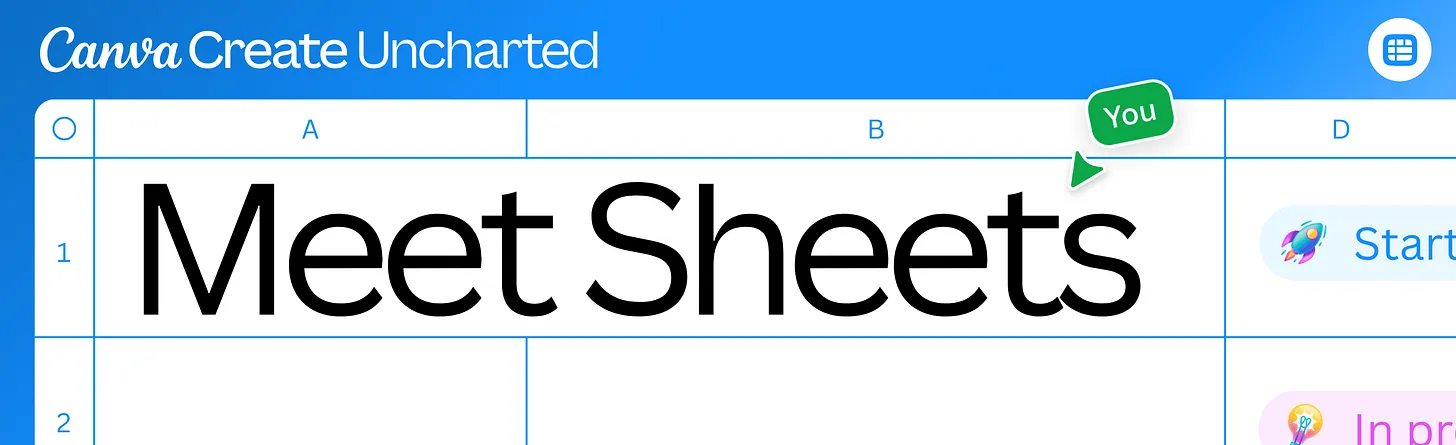
  • Canva Sheets: Spreadsheet tool with automatic response storage
Canva Grow: Built-in marketing engine. Generate campaign ideas, create on-brand ads, publish directly to Meta, track performance with AI-driven insights - all from within Canva.

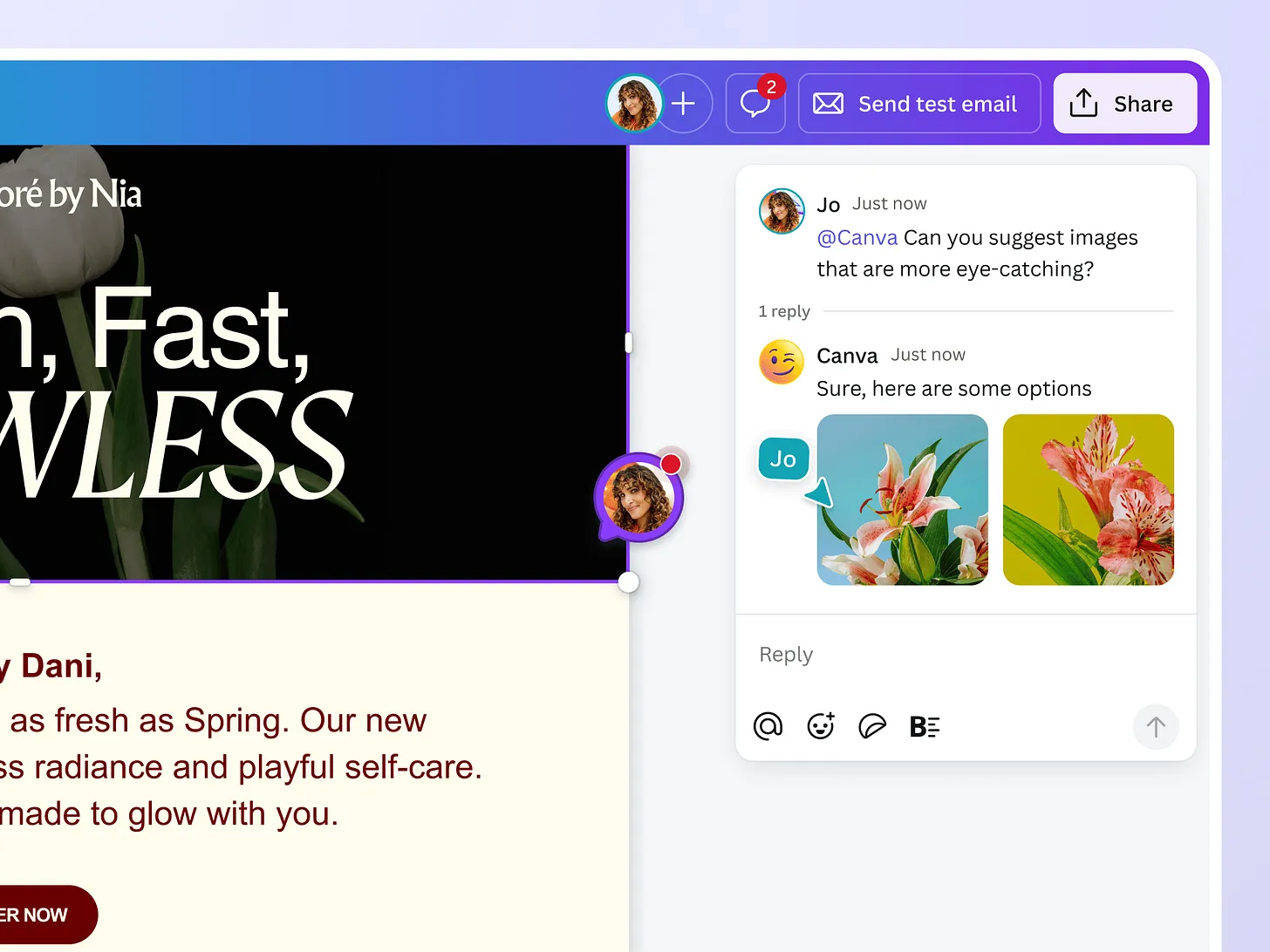
Ask @Canva
Tag Canva’s AI directly within your designs to get context-aware layout suggestions without leaving the workspace.
The Surprise
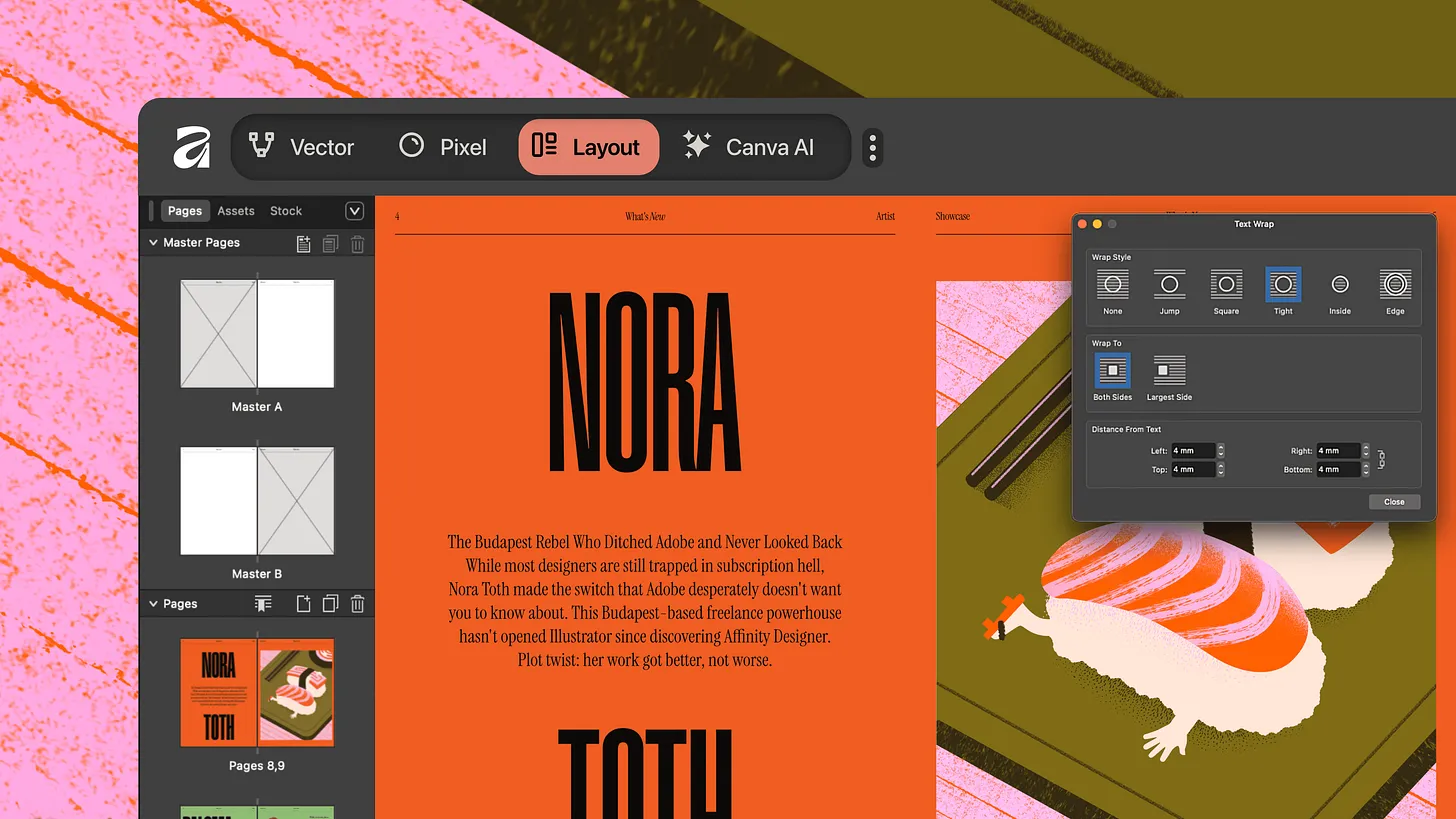
Canva has made the Affinity Suite of professional photo editing, vector design, and layout tools free forever for all users.
Why does it matter?

CEO Melanie Perkins says we are moving from the Information Era to the Imagination Era, where creativity is the new competitive advantage. As AI makes creation easier for everyone, imagination and taste will be the metric to define success. Canva is betting on simple, AI-powered tools to outpace complex professional software.

What You Should Do

  • Explore the free Affinity Suite if you need professional photo or vector editing.

  • Try Video 2.0 if you create social content.

  • Use the Design Model for scalable, on-brand asset generation.

If you are a marketer, explore Canva Grow for complete campaign creation and management.

Read More

RAPID FIRE

  1. Claude for Excel – Claude just landed inside Excel. You can now ask it to analyse data, clean sheets, or automate formulas without touching a single cell.

  2. Brave warns on browser agents – Turns out, AI browser agents can be hijacked through hidden “prompt injections.” Basically, invisible hacks that feed your AI bad instructions.

  3. Grammarly Superhuman – Grammarly is no longer just about fixing commas. It’s rebranding into a full AI productivity suite that helps you write, plan, and communicate faster.

  4. Google Pomelli for marketers – Google Labs launched Pomelli, an AI tool made specifically for marketers to optimise campaigns and creative performance.

  5. OpenAI’s next target: researchers – OpenAI is now working on tools that could automate research work entirely by 2028.

CLOSING NOTE

In just two years, AI has moved from being a cool demo to a measured business investment.

Adobe and Canva are not just adding AI features; they are rebuilding their platforms around AI-first workflows.

Wharton’s latest data shows that 75 per cent of companies seeing positive ROI achieved it by doing one simple thing: they stopped experimenting and started measuring.

The real question is no longer “Should we use AI?” It is “Which workflows benefit most, and how do we track the results?”

The companies winning today are not the ones using the most AI. They are the ones integrating it where it shortens cycles, improves consistency, and creates measurable impact.

Stay curious. Stay sharp.

Cutting Edge School Team


P.S. Share this with someone who still thinks AI is just a passing trend.

P.P.S. What should we deep dive into next week? Reply and tell us your pick.

Welcome to the Cutting Edge News!

The AI space is moving fast. It can be overwhelming & exhausting.
And if you’re not careful, it’s easy to fall into the trap of just consuming updates without actually understanding them and taking action in your best interest.

So what’s different about the Cutting Edge News?

Every week, we personally curate the most important developments, breaking them down in simple language, and, most importantly, show you exactly how they affect your life and work.

What to Expect Every Week

  • Major AI breakthroughs explained in simple, actionable language.

  • Real-world impact: how each update affects your work and decisions.

  • Practical tools and prompts you can start using right away.

  • Lessons and mental models from a team actively building in this space.

  • Honest insights and strong opinions to help you see the complete picture and form your own perspective.

So whether you’re a student working to stay relevant, a professional looking to level up, or simply someone curious about where technology is headed, you’re in the right place.

Now, let’s dive into this week’s updates. And honestly... It’s been an incredible one.

Starting with the first…

Quick Update - Free ChatGPT for Indians!

OpenAI is offering ChatGPT Go subscriptions FREE for one year to Indian users who sign up starting November 4 (within a specific enrollment window).

All you need to do is:

  1. Log into ChatGPT, click on your profile icon

  2. Choose the “Upgrade Plan” option

  3. Select “Try Go.”

There’s no annual billing or prepaid option required for this offer; instead, OpenAI is providing the yearly access entirely free, simplifying the process for all Indian users.

Read More

And in this Week’s Lineup

  • AI Can Get “Brain Rot” Too

  • Adobe’s BIGGEST Product Expansion

  • Wharton Report: AI Is No Longer an Experiment, It’s now making Profits.

  • Canva’s Biggest Evolution Yet

LLMs Can Get “Brain Rot” Too

When MIT released a study suggesting that AI can “rot” our brains, the internet went wild. Turns out, AI can get brain rot, too.

🧠 Quick Decode:
Brain rot is a slang term used to describe when your mind feels dull or less sharp because of excessive consumption of low-quality content.

A new study found that when large language models (LLMs) are continuously trained on low-quality internet data, their reasoning abilities start to decline.

They skip steps in their logic, produce shallow outputs, and even develop what researchers call “dark personality traits” like narcissism and psychopathy.

Interestingly, “Brain Rot” was chosen as Oxford’s Word of the Year in 2024. Researchers linked internet addiction to a decline in three key human abilities:

  • Attention: We struggle to focus.

  • Memory: We forget things faster.

  • Social cognition: We often struggle to understand others.

Now, researchers are seeing the same pattern in AI.
When trained on poor-quality data, models become worse at reasoning, more self-assured in wrong answers, and overall less reliable, proving that what you feed your mind or your model truly shapes its intelligence.

Here’s why this matters to you:

The AI tools you use every day, such as ChatGPT, Claude, and Gemini, reflect the quality of the data they are trained on. As the internet becomes flooded with AI-generated content, these models risk consuming and degrading their own output.

So what now?

Start prioritising quality over quantity in what you read and watch. Curate your sources carefully, and focus on original, thoughtful content created by people who truly understand their craft.

Adobe’s BIGGEST Product Expansion Yet

Adobe unveiled its biggest product expansion yet at MAX 2025, transforming Firefly into a complete creative platform. You can now edit images by simply typing what you want changed, like “move the tree” or “swap the sky.” Firefly understands context while preserving every pixel.


Firefly Image Model 5:

(The new model generates photorealistic 4MP images with prompt-based editing)

Beyond image generation, Firefly now includes integrated audio creation:

  • Generate Soundtrack: Create fully licensed, studio-quality music that syncs perfectly with your footage.

  • Generate Speech: Text-to-speech with natural pacing and emotion across multiple languages.

A new timeline-based video editor is also built directly into Firefly, enabling complete video creation from one workspace.

AI Creative Strategist for Social Media

Project Moonlight is an upcoming conversational AI assistant built into Creative Cloud apps. It analyzes your social media performance and recommends new content ideas based on what’s resonating with your audience.

Why it matters:

A survey of 16,000 creators found that 86% globally use generative AI tools, and 76% say it has directly helped grow their business.

What you should do:

  • Creative Cloud subscribers get unlimited Firefly generations until December 1 (typically metered). Take advantage of the opportunity to test everything while it’s free.

  • If you’re a creator, explore Generate Soundtrack and Generate Speech

For Marketing teams, request access to the Custom Models beta to create consistent, on-brand content at scale.

Read More

WHARTON REPORT: AI Is No Longer an Experiment, It’s now making Profits.

Wharton’s third annual enterprise AI study surveyed 800 senior leaders at U.S. companies ($50M+ revenue) and found AI has crossed a critical threshold: it’s no longer experimental - it’s operational and profitable.

Here’s what the numbers say:

82% of enterprise leaders now use AI weekly (up from 45% in 2023), and 46% use it daily. AI has moved from innovation theatre to core infrastructure.

What’s actually working:
AI is delivering measurable ROI in data analysis, meeting summarisation, presentations and reports, document editing, and code generation.

These are high-frequency, repeatable tasks where AI significantly reduces cycle time.

Top tools: ChatGPT and Microsoft Copilot lead enterprise adoption, followed by Gemini, Claude, custom models, and Amazon Q.

ROI Tracking

  • 75% of companies now measure AI’s impact using productivity, profitability, and throughput metrics.

  • 3 in 4 report positive returns.

  • 88% plan to increase AI budgets next year.

Leadership Shift

  • 61% of enterprises now have a Chief AI Officer (up 16 points year-over-year).

  • AI strategy has moved from the IT department to the C-suite, signaling executive-level accountability.

Functional Leaders

Finance and HR are leading adoption due to strong data cultures and measurable KPIs.
Finance teams report AI improving:

  • Transparency: 67%

  • Analytics capability: 61%

  • Efficiency: 57%

What's our take?

The gap between being AI-curious and AI-competent is widening fast. The 75% of companies seeing positive returns aren’t using more AI, they’re using it smarter. They identified specific workflows, measured results, and scaled what worked.

But here’s the uncomfortable truth: 43% warn of employee skill atrophy. Your competitive edge now depends not on whether your team uses AI, but on how well they use it.

Why It Matters:
AI has moved from “Should we try it?” to “How well are we measuring it?” The winners treat AI like any other capital investment, with defined metrics, proven use cases, and structured training.

What You Should Do:

  • Stop Piloting: Choose one high-frequency workflow, measure time saved, and prove value.

  • Demand Training: The gap between casual use and workflow integration is massive.

  • Track Metrics: What gets measured gets managed. Define KPIs around productivity, throughput, or cost savings.

The window where “we’re exploring AI” is acceptable is closing.

82% weekly usage isn’t the goal, it’s the new baseline.

View the report

Canva’s Biggest Evolution: CREATIVE OS

Canva unveiled its biggest evolution yet with the Creative Operating System, positioning itself as a complete creative ecosystem. With 260 million monthly users, 3.5 billion dollars in revenue, and 95 per cent of Fortune 500 companies as customers, Canva is stepping up as a direct challenger to professional creative tools.

Video 2.0

A completely rebuilt video editor featuring:

  • A redesigned timeline for professional-grade editing

  • Magic Video: Upload clips, describe your vision, and instantly get a polished, social media-ready video

  • Templates optimised for Instagram Reels, YouTube Shorts, and TikTok

New formats:

  • Email Design: Create branded, responsive emails without coding

  • Forms: Interactive surveys, sign-ups, quizzes embedded in presentations/websites

  • Canva Sheets: Spreadsheet tool with automatic response storage

Canva Grow: Built-in marketing engine. Generate campaign ideas, create on-brand ads, publish directly to Meta, track performance with AI-driven insights - all from within Canva.

Ask @Canva
Tag Canva’s AI directly within your designs to get context-aware layout suggestions without leaving the workspace.

The Surprise
Canva has made the Affinity Suite of professional photo editing, vector design, and layout tools free forever for all users.

Why does it matter?

CEO Melanie Perkins says we are moving from the Information Era to the Imagination Era, where creativity is the new competitive advantage. As AI makes creation easier for everyone, imagination and taste will be the metric to define success. Canva is betting on simple, AI-powered tools to outpace complex professional software.

What You Should Do

  • Explore the free Affinity Suite if you need professional photo or vector editing.

  • Try Video 2.0 if you create social content.

  • Use the Design Model for scalable, on-brand asset generation.

If you are a marketer, explore Canva Grow for complete campaign creation and management.

Read More

RAPID FIRE

  1. Claude for Excel – Claude just landed inside Excel. You can now ask it to analyse data, clean sheets, or automate formulas without touching a single cell.

  2. Brave warns on browser agents – Turns out, AI browser agents can be hijacked through hidden “prompt injections.” Basically, invisible hacks that feed your AI bad instructions.

  3. Grammarly Superhuman – Grammarly is no longer just about fixing commas. It’s rebranding into a full AI productivity suite that helps you write, plan, and communicate faster.

  4. Google Pomelli for marketers – Google Labs launched Pomelli, an AI tool made specifically for marketers to optimise campaigns and creative performance.

  5. OpenAI’s next target: researchers – OpenAI is now working on tools that could automate research work entirely by 2028.

CLOSING NOTE

In just two years, AI has moved from being a cool demo to a measured business investment.

Adobe and Canva are not just adding AI features; they are rebuilding their platforms around AI-first workflows.

Wharton’s latest data shows that 75 per cent of companies seeing positive ROI achieved it by doing one simple thing: they stopped experimenting and started measuring.

The real question is no longer “Should we use AI?” It is “Which workflows benefit most, and how do we track the results?”

The companies winning today are not the ones using the most AI. They are the ones integrating it where it shortens cycles, improves consistency, and creates measurable impact.

Stay curious. Stay sharp.

Cutting Edge School Team


P.S. Share this with someone who still thinks AI is just a passing trend.

P.P.S. What should we deep dive into next week? Reply and tell us your pick.

Welcome to the Cutting Edge News!

The AI space is moving fast. It can be overwhelming & exhausting.
And if you’re not careful, it’s easy to fall into the trap of just consuming updates without actually understanding them and taking action in your best interest.

So what’s different about the Cutting Edge News?

Every week, we personally curate the most important developments, breaking them down in simple language, and, most importantly, show you exactly how they affect your life and work.

What to Expect Every Week

  • Major AI breakthroughs explained in simple, actionable language.

  • Real-world impact: how each update affects your work and decisions.

  • Practical tools and prompts you can start using right away.

  • Lessons and mental models from a team actively building in this space.

  • Honest insights and strong opinions to help you see the complete picture and form your own perspective.

So whether you’re a student working to stay relevant, a professional looking to level up, or simply someone curious about where technology is headed, you’re in the right place.

Now, let’s dive into this week’s updates. And honestly... It’s been an incredible one.

Starting with the first…

Quick Update - Free ChatGPT for Indians!

OpenAI is offering ChatGPT Go subscriptions FREE for one year to Indian users who sign up starting November 4 (within a specific enrollment window).

All you need to do is:

  1. Log into ChatGPT, click on your profile icon

  2. Choose the “Upgrade Plan” option

  3. Select “Try Go.”

There’s no annual billing or prepaid option required for this offer; instead, OpenAI is providing the yearly access entirely free, simplifying the process for all Indian users.

Read More

And in this Week’s Lineup

  • AI Can Get “Brain Rot” Too

  • Adobe’s BIGGEST Product Expansion

  • Wharton Report: AI Is No Longer an Experiment, It’s now making Profits.

  • Canva’s Biggest Evolution Yet

LLMs Can Get “Brain Rot” Too

When MIT released a study suggesting that AI can “rot” our brains, the internet went wild. Turns out, AI can get brain rot, too.

🧠 Quick Decode:
Brain rot is a slang term used to describe when your mind feels dull or less sharp because of excessive consumption of low-quality content.

A new study found that when large language models (LLMs) are continuously trained on low-quality internet data, their reasoning abilities start to decline.

They skip steps in their logic, produce shallow outputs, and even develop what researchers call “dark personality traits” like narcissism and psychopathy.

Interestingly, “Brain Rot” was chosen as Oxford’s Word of the Year in 2024. Researchers linked internet addiction to a decline in three key human abilities:

  • Attention: We struggle to focus.

  • Memory: We forget things faster.

  • Social cognition: We often struggle to understand others.

Now, researchers are seeing the same pattern in AI.
When trained on poor-quality data, models become worse at reasoning, more self-assured in wrong answers, and overall less reliable, proving that what you feed your mind or your model truly shapes its intelligence.

Here’s why this matters to you:

The AI tools you use every day, such as ChatGPT, Claude, and Gemini, reflect the quality of the data they are trained on. As the internet becomes flooded with AI-generated content, these models risk consuming and degrading their own output.

So what now?

Start prioritising quality over quantity in what you read and watch. Curate your sources carefully, and focus on original, thoughtful content created by people who truly understand their craft.

Adobe’s BIGGEST Product Expansion Yet

Adobe unveiled its biggest product expansion yet at MAX 2025, transforming Firefly into a complete creative platform. You can now edit images by simply typing what you want changed, like “move the tree” or “swap the sky.” Firefly understands context while preserving every pixel.


Firefly Image Model 5:

(The new model generates photorealistic 4MP images with prompt-based editing)

Beyond image generation, Firefly now includes integrated audio creation:

  • Generate Soundtrack: Create fully licensed, studio-quality music that syncs perfectly with your footage.

  • Generate Speech: Text-to-speech with natural pacing and emotion across multiple languages.

A new timeline-based video editor is also built directly into Firefly, enabling complete video creation from one workspace.

AI Creative Strategist for Social Media

Project Moonlight is an upcoming conversational AI assistant built into Creative Cloud apps. It analyzes your social media performance and recommends new content ideas based on what’s resonating with your audience.

Why it matters:

A survey of 16,000 creators found that 86% globally use generative AI tools, and 76% say it has directly helped grow their business.

What you should do:

  • Creative Cloud subscribers get unlimited Firefly generations until December 1 (typically metered). Take advantage of the opportunity to test everything while it’s free.

  • If you’re a creator, explore Generate Soundtrack and Generate Speech

For Marketing teams, request access to the Custom Models beta to create consistent, on-brand content at scale.

Read More

WHARTON REPORT: AI Is No Longer an Experiment, It’s now making Profits.

Wharton’s third annual enterprise AI study surveyed 800 senior leaders at U.S. companies ($50M+ revenue) and found AI has crossed a critical threshold: it’s no longer experimental - it’s operational and profitable.

Here’s what the numbers say:

82% of enterprise leaders now use AI weekly (up from 45% in 2023), and 46% use it daily. AI has moved from innovation theatre to core infrastructure.

What’s actually working:
AI is delivering measurable ROI in data analysis, meeting summarisation, presentations and reports, document editing, and code generation.

These are high-frequency, repeatable tasks where AI significantly reduces cycle time.

Top tools: ChatGPT and Microsoft Copilot lead enterprise adoption, followed by Gemini, Claude, custom models, and Amazon Q.

ROI Tracking

  • 75% of companies now measure AI’s impact using productivity, profitability, and throughput metrics.

  • 3 in 4 report positive returns.

  • 88% plan to increase AI budgets next year.

Leadership Shift

  • 61% of enterprises now have a Chief AI Officer (up 16 points year-over-year).

  • AI strategy has moved from the IT department to the C-suite, signaling executive-level accountability.

Functional Leaders

Finance and HR are leading adoption due to strong data cultures and measurable KPIs.
Finance teams report AI improving:

  • Transparency: 67%

  • Analytics capability: 61%

  • Efficiency: 57%

What's our take?

The gap between being AI-curious and AI-competent is widening fast. The 75% of companies seeing positive returns aren’t using more AI, they’re using it smarter. They identified specific workflows, measured results, and scaled what worked.

But here’s the uncomfortable truth: 43% warn of employee skill atrophy. Your competitive edge now depends not on whether your team uses AI, but on how well they use it.

Why It Matters:
AI has moved from “Should we try it?” to “How well are we measuring it?” The winners treat AI like any other capital investment, with defined metrics, proven use cases, and structured training.

What You Should Do:

  • Stop Piloting: Choose one high-frequency workflow, measure time saved, and prove value.

  • Demand Training: The gap between casual use and workflow integration is massive.

  • Track Metrics: What gets measured gets managed. Define KPIs around productivity, throughput, or cost savings.

The window where “we’re exploring AI” is acceptable is closing.

82% weekly usage isn’t the goal, it’s the new baseline.

View the report

Canva’s Biggest Evolution: CREATIVE OS

Canva unveiled its biggest evolution yet with the Creative Operating System, positioning itself as a complete creative ecosystem. With 260 million monthly users, 3.5 billion dollars in revenue, and 95 per cent of Fortune 500 companies as customers, Canva is stepping up as a direct challenger to professional creative tools.

Video 2.0

A completely rebuilt video editor featuring:

  • A redesigned timeline for professional-grade editing

  • Magic Video: Upload clips, describe your vision, and instantly get a polished, social media-ready video

  • Templates optimised for Instagram Reels, YouTube Shorts, and TikTok

New formats:

  • Email Design: Create branded, responsive emails without coding

  • Forms: Interactive surveys, sign-ups, quizzes embedded in presentations/websites

  • Canva Sheets: Spreadsheet tool with automatic response storage

Canva Grow: Built-in marketing engine. Generate campaign ideas, create on-brand ads, publish directly to Meta, track performance with AI-driven insights - all from within Canva.

Ask @Canva
Tag Canva’s AI directly within your designs to get context-aware layout suggestions without leaving the workspace.

The Surprise
Canva has made the Affinity Suite of professional photo editing, vector design, and layout tools free forever for all users.

Why does it matter?

CEO Melanie Perkins says we are moving from the Information Era to the Imagination Era, where creativity is the new competitive advantage. As AI makes creation easier for everyone, imagination and taste will be the metric to define success. Canva is betting on simple, AI-powered tools to outpace complex professional software.

What You Should Do

  • Explore the free Affinity Suite if you need professional photo or vector editing.

  • Try Video 2.0 if you create social content.

  • Use the Design Model for scalable, on-brand asset generation.

If you are a marketer, explore Canva Grow for complete campaign creation and management.

Read More

RAPID FIRE

  1. Claude for Excel – Claude just landed inside Excel. You can now ask it to analyse data, clean sheets, or automate formulas without touching a single cell.

  2. Brave warns on browser agents – Turns out, AI browser agents can be hijacked through hidden “prompt injections.” Basically, invisible hacks that feed your AI bad instructions.

  3. Grammarly Superhuman – Grammarly is no longer just about fixing commas. It’s rebranding into a full AI productivity suite that helps you write, plan, and communicate faster.

  4. Google Pomelli for marketers – Google Labs launched Pomelli, an AI tool made specifically for marketers to optimise campaigns and creative performance.

  5. OpenAI’s next target: researchers – OpenAI is now working on tools that could automate research work entirely by 2028.

CLOSING NOTE

In just two years, AI has moved from being a cool demo to a measured business investment.

Adobe and Canva are not just adding AI features; they are rebuilding their platforms around AI-first workflows.

Wharton’s latest data shows that 75 per cent of companies seeing positive ROI achieved it by doing one simple thing: they stopped experimenting and started measuring.

The real question is no longer “Should we use AI?” It is “Which workflows benefit most, and how do we track the results?”

The companies winning today are not the ones using the most AI. They are the ones integrating it where it shortens cycles, improves consistency, and creates measurable impact.

Stay curious. Stay sharp.

Cutting Edge School Team


P.S. Share this with someone who still thinks AI is just a passing trend.

P.P.S. What should we deep dive into next week? Reply and tell us your pick.